munch friedrich nietzsche, mm.g.00263 02

Brains Detesting the Mob

Modernist intellectuals proclaimed that the masses needed extermination, death by plagues, aborting, and gassing. Why?

pexels davidmcelwee 11677697

Author John Carey says it’s because of universal education that dragged almost everyone upwards toward the “higher classes”.

version 1.0.0

The intellectuals – Virginia Woolf, T.S.Eliot, Jose Ortega y Gasset, H.G.Wells, Aldous Huxley, and many others – felt a sudden need, prompted by Nietzsche’s philosophy of the “great man”, to put some breathing space between themselves and the “semi-educated” mass. They did this by openly advocating the “disappearing” of the common mob that common schools were commonly pumping out.

munch friedrich nietzsche, mm.g.00263 02
Edvard Munch’s sketch of the “heroic” philosopher Nietzsche

The intellectuals also distanced themselves from the proles by making their own writings and thought as difficult and obscure as they possibly could.

Ever wonder why you can’t read Proust?

pexels calil encarnacion 30667006 34923529

It’s not because you’re stupid. It’s because modernist literature and philosophy is designed to be impenetrable. Postmodern – today’s stuff, especially the French thinkers – is even worse.

In other words, intellectuals are proud and vicious and take status and class differences very seriously. Just like HGTV tries to fend off the wrong kind of viewer with their jerky and nauseating camerawork, Adorno wants to drive you away with a migraine.

What was it about the mass of humanity – you, in other words – that the modernist individuals found ghastly?

Your love of canned foods, especially canned fish. Your love of crap food and cheese cheese cheese in general.

pexels polina tankilevitch 4109274
what the dreaded masses like

Your love of, eventually, radio and television and cable TV and streaming and tour groups and cruise ships full of viruses and bad bands.

Got NETFLIX? Of course you do, you moron!

netflix 2015 logo
what morons waste their lives on

They hate that you live in the suburbs, which were already booming at the turn of the 20th century. Your suburbs stole the wooded footpaths within close distance of cities that intellectuals enjoyed trodding upon as they contemplated and calculated how to fend you off.

They hate that you’ve been educated just enough to threaten their social status but not enough to read Proust, even though you – dangerously – have heard of Proust.

They hate organized, professional sports. Why? Because you like organized, professional sports. Because they envy the money pro athletes make that could be better diverted to intellectual research and second homes for intellectuals.

Mainly, they hate seeing you having fun.

pexels robert hernandez villalta 35224 128457
way too much fun

All of this would be okay, I suppose, if, as the back cover of Carey’s book points out, some intellectuals hadn’t championed gas chambers and nuclear bombs for those who weren’t their fans.

I fear mentioning Hitler, but he thought of himself as an intellectual. And since eugenics and Darwin and Nietzsche were in the air at the time, he was in a position to give these things a shot in reality. Right down to exterminating whole classes of humanity and art and using German masses in a meatgrinder. Stalin, the Turks, and others worked this same soil.

Carey’s THE INTELLECTUALS AND THE MASSES is a classic and is eye-opening. Right down to tinned food as a way to mark those for extermination. Is Campbell’s Soup still a thing?

Quick, hide it.

campbell's soup cans by andy warhol
Andy Warhol – certified mass man?

81cmxbkwlwl. sl1500

Holding Yourself Back From Greatness?

Director Terrence Malick’s BADLANDS is one of the greatest movies ever made. His next movie, DAYS OF HEAVEN, is close to great. After 15 years more or less hiding, his third movie, THE THIN RED LINE, is good.

It went downhill from there.

81cmxbkwlwl. sl1500

John Bleasdale’s The Magic Hours makes it clear that Malick’s BADLANDS barely got made. It had a non-union crew, had no decent financing, had trouble getting distribution once it was made, and nearly burned to death one of the crew when a house fire scene went (incompetently) awry. This is the story of an indie film that had Malick begging money from friends, colleagues, and parents.

badlands movie poster

We love these tough stories when they turn out well. BADLANDS turned out well, won awards, has worn fame well, and has gone down in filmmaking history. It established Terrence Malick as a filmmaking genius at a young age. Perhaps to his detriment.

How do you follow up an early act of genius?

tm07
Malick in a cameo scene in BADLANDS

Loosely based upon a real murder spree by a young couple, stars Sissy Spacek, Martin Sheen, and Warren Oates – with Malick as two different minor characters; money was tight – fill out the lushly-shot and atmospheric movie with murderous psychotic and erotic blankness.

pexels brett sayles 10404245

When not randomly killing, they dance to music on a car radio. They plan their future. They dream of Canada or Mexico. They shoot fish. Sheen’s character Kit shoots bounty hunters.

pexels thegenner 17985208

Malick makes violence and murder mindless. Natural. Normal. Psychosis has no boundaries. Being psychotic is a lot like hanging laundry on a clothesline: banal.

And it’s brilliant. Haunting.

DAYS OF HEAVEN is set just before World War I in the plains of Texas. A wealthy wheat farmer brings in trainloads of poor immigrants to act as his peasants. Again, the movie is wonderfully atmospheric – Malick is a master artist – but it’s rather a standard story of love and jealousy and eventual murder.

daysofheavenposter

HEAVEN is a great movie because of its feel and because of the voice-over by young actress Linda Manz. Spacek did a voice-over for BADLANDS, too.

These narrations acted as a kind of crutch for Malick. To his credit, he recognized that and tried to minimize using them in the future. But in his first two movies, wow, they make them really work. Spacek’s unique gravelly voice, and Manz’s even more gravelly 14 year old’s voice, are the things of dreams.

And then THE THIN RED LINE came about 15 years after his two classics. Bleasdale makes it clear that after two difficult acts of genius, Malick may have withdrawn because of the pressure to follow up.

Malick did follow up. Nothing he has done has been bad. But, to me at least, it’s the common story of genius slowly petering out the more and more we expect of it.

I see the same trajectory in novelist Don DeLillo’s career, only without the acts of genius frontloaded like they are with Malick. In DeLillo’s case, WHITE NOISE was a mid-career shooting star. Then he was told that he was brilliant, believed it, and tried too hard to write big-themed novels: the history of garbage in UNDERGROUND and a re-formulation of the JFK assassination in LIBRA.

But we have what we have, some great movies and some great books. We need to accept that not everything can always be perfect, and perfection is seldom repeatable.

Do artists retreat on purpose, to escape impossible expectations? Or is it mere entropy? Or erosion? Or overreaching?

Or, as in HEAVEN, is it . . . locusts, external factors, time and aging alone?

pexels jeffrey czum 254391 3330118
very much the farmer’s house in DAYS OF HEAVEN

pexels ron lach 9893523

Entertainment vs. Art

“Open your mind. Figure out things for yourself.” These are the most frightening sentences to most people.

red room
David Lynch’s Red Room in the various TWIN PEAKS series and movie

Most people either go to school, go to work, or are retired. And then they die.

trinity test
The Trinity test, the first nuclear detonation in history. Hell unleashed in TWIN PEAKS: The Return

These normal people do not want to be challenged when they get home at night. They want to overeat, have some pot or booze, and fall asleep while watching “COLUMBO”, where everything is spelled out clearly and tied with a nice ribbon.

This is called “entertainment”.

Entertainment consists of things you don’t have to think about. The same damned photos. The same food. The same route. Algorithms that all direct the same ads to you. Portaits of horses and doggies and paintings of barns and waterfalls. The same damned symphonies – the “warhorses” – and the same damned Paul McCartney.

And sports. The whole point of sports is that there WILL be a definite conclusion. There WILL be a plot, even though the result will vary. (Sports fans are always disappointed by ties. There’s no conclusion.)

Oh, look! Paul has another album out at 97! Isn’t he amazing! Yankees 7, Mets 2. The murderer was the shifty-eyed guy on “Mannix”. Bach always sounds like the Bach you were “exposed to” – a telling phrase, a damning phrase! – in 4th Grade music class. Yup, that’s my dog. Looks just like him, I’d know him anywhere! Here’s a photo of my family again, yes, I have one! Republicans are the problem, Democrats are the problem, I know, I’m a moron, but this is what I firmly believe, say stuck people.

And there’s nothing wrong with this. We all have to learn, work, and die. We all need to unwind. And we all have to be mindless at times and recite the given script.

However . . .

giantno
The Fireman in TWIN PEAKS, one of the entities who controls the universe. And you.

There is an alternative to eating predigested commercial pablum. It takes effort, not just passive copying, not just comfort food.

You have to WORK with the author or screenwriter or composer or artist, and be uncomfortable while you help “write” the stories in your own mind.

This is the realm of being fully human. This is the realm of true happiness.

And this is the world of abstract art, modern art music or jazz, literary or experimental writing. Things that take work. Things that make you uncomfortable. Things that make you frustrated. Things that make you . . . think.

To think is to be fully human and fully yourself. And happy. Maybe for the first time in your life.

I just read Clarkson University graduate John Thorne’s book, OMINOUS WHOOSH: A Wandering Mind Returns to Twin Peaks.

51y3py4izfl. sl1491

One of the things Mr. Thorne discusses is the notion that “Twin Peaks” fits its scenes and stories (as such) onto film the way most people surf the internet or “doomscroll”. At random. In little bits. In a hashlike-fashion. With static. Very much unlike an overtime goal that decisively wins a game.

Fragmented. Distracted. Moving from one little interesting nub to another. As David Letterman once described, sort of, how he surfed cable TV, “I switch from channel to channel, see a breast, watch awhile, then move on.”

Sometimes the channels tightly cohere. You have reached the shopping channel tier, perhaps, or the weird religions sphere. Everything blurs together, but they’re about the same and tell about the same story, right?

Sometimes, the channels are randomly squashed together. Smug and condescending PBS next to The Gun Channel next to the Look-At-The-Newts-Mating-In-A-Lovely-Spring-Pond nature channel.

Here is a gallery full of my abstract artwork. Notice how it coheres as abstract, yet each individual painting – David Lynch was an abstract artist, mainly a painter, and an abstract filmmaker – is . . . random in its effects:

271183215 10159755532060747 8948259227172787468 n copy
Art by Gregg Fedchak, in a Lynchian red room. Photo via the Frederic Remington Museum. Study group in action.

And here is the other aspect of “Twin Peaks”: it’s not just doomscrolling or breast-scrolling, it’s not just entertainment to kill time, it’s art to fulfill your humanity and to bring you a sniff of happiness – true happiness.

270938082 10159755530745747 1563090405532852767 n copy
Photo by the Frederic Remington Museum. Paintings by Gregg Fedchak

So the various “Twin Peaks” are surfing-like, but not just random. Each “episode” or scene invites you to help make doomscrolling into a lush and verdant field that you have helped plant.
pexels ron lach 9785021

Suddenly, you’re not just a passive consumer of entertainment, but like The Fireman in the photo above. A co-creator of a universe. Your own universe.

Perhaps your universe is disturbing. Perhaps your inner world is a lot like these scurrying “Woodsmen” that Lynch created:

conveniencestore
The evil Lynchian Woodsmen

Get used to your own Red Room.

Creativity. It’s good. Which is why you’ve carefully crafted a banal world of sports and politics and “Columbo”. Because you’re afraid you don’t deserve to be happy?

pexels ron lach 9893523
a Red Room

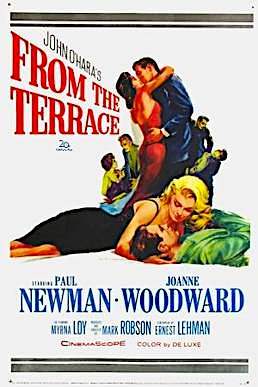
poster of from the terrace

The Art of Burning Bridges The O’Hara Way

Everybody hated John O’Hara. But he made a good living at it.

I just finished Geoffrey Wolff’s biography of author John O’Hara, and I know less about O’Hara than I did when I started it. Like the previous bio I read, anything about him sucks your brains out your ears and you know less about him than when you or I read him in college.

71umih2edbl. sl1500

Perverse and prolific, O’Hara built, not unlike P.G. Wodehouse did in his many Blandings Castle novels, a cottage industry writing in the same damned fictional world, set in his native Pottsville, PA, thinly disguised as “Gibbsville.”

Looking back at him a half century since his death, you have to wonder why anybody cared.

He was concerned about sex in his small town, and about social class distinctions in small cities, and preppie sports, and Brooks Brothers shirts, and his Rolls Royce, and booze, and Yale, and booze, and booze.

Reading O’Hara today, or reading anything about him, is like opening a crypt and sleeping with your late uncle.

I have no idea what this biographer, Geoffrey Wolff, was trying to do, although he says he was trying to find out the “why” of why John O’Hara was such a perversely tortured creature. But, as he admits at the end , he did no better than others who tried to answer “why”.

So O’Hara is forever an enigma. He’s good for studying an era. It’s hard to believe, but he wrote the books and treatments of early and mid Hollywood blockbusters (and some stinkers).

poster of from the terrace

Let’s let Paul Newman and Joanne Woodward take us out. It seems so long ago.

Because it was.

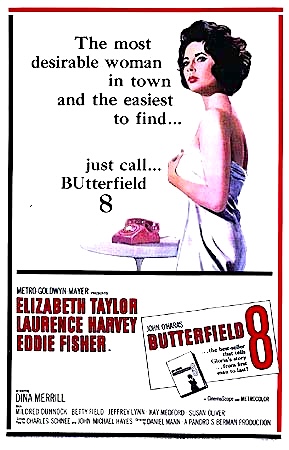
butterfield8 movieposter

John O’Hara: “What the fuck are YOU looking at?”

Author John O’Hara was once beaten up at a bar by two midgets after he shouted at one, “What the fuck are YOU looking at?”

john o'hara cph.3b08576
a young John O’Hara

O’Hara was a newspaperman, a journalist, a short story writer, and a bestselling novelist. He lived the first three-quarters of the 20th century, and nobody captured the essence of his times better than he did. As biographer Frank MacShane says, nobody sold more books while being as loathed by everyone as he was.

20250111 100337.jpg copy

I was assigned Ten North Frederick, his mid-1950’s biggie, by Brenda Murphy (who was a great teacher) my freshman year at St. Lawrence. I thought I might want to major in English. O’Hara convinced me otherwise.

The novel is about an obscure small city lawyer who has spent his whole life feeling entitled to become president, or governor of Pennsylvania, or something big and important.

O’Hara spent his whole life feeling entitled to win the Pulitzer or Nobel Prize, despite coming from the real small city in Pennsylvania – Pottsville – that his fictional character knew as Gibbsville.

You get the drift.

And all of his novels have this same entitlement/bitter loss/”poor me” aura. Oh, he does it well. But it wears on readers.

appointment in samarra

He was middle-class or upper middle-class, a beloved son of an Irish surgeon, but he desperately wanted to be a WASP.

When his father died relatively young, with messed up finances, O’Hara was left with his dream of attending Yale or some other Ivy shattered. His whole life he had one half of his brain stuck in Irish workingman culture and the other half of his brain idealizing the lives of preppies and the “tasteful” upper classes.

pexels gene samit 546626702 36883157
John O’Hara’s dream

The result was an alcoholic life of envy and hatred of both the poor and the wealthy. He could never be happy in either Pottsville or New York and Hollywood, where he toiled in the studios and had his own work turned into movies.

Skimming Frederick yesterday, it’s apparent that what sold O’Hara to the masses in the 20th century was sex. His editors regularly had to excise certain scenes, and on one occasion he had to flee New York State under cover of darkness to avoid being arrested and jailed on obscenity charges.

butterfield8 movieposter
based on a John O’Hara novel of the same name

By today’s standards, his work is not only not obscene, it’s not even bad language. But, as the internet proves, people live for sex, and the pickings were slimmer in the 20th century, and you had to take what you could get.

His fans today are few. Critics who approve of him say that he shows a deep knowledge of social classes in America, and was a great sage of exactly what it felt to live in the 1920’s or ’50’s.

But MacShane’s biography, and newer ones that I’m starting, show a bitter man with one leg in Pottsville, one leg just outside of New Haven, with the right formula to titillate the housewives and commuters of suburbia. But that’s the wrong formula to interest scholars and readers today.

pexels thatguycraig000 1525616
leaving Pottsville?

pexels babydov 7789836

Nuns Don’t Believe

pexels babydov 7789836

In the penultimate scene in the greatest novel ever written, Don DeLillo’s WHITE NOISE, a nun in an emergency room tells the protagonist that he’s a dumbhead if he believes in God and heaven. The prompt for this was a calendar on the wall of the treatment room with a Norman Rockwell-esque painting of JFK and the late Pope John (of Vatican II fame) enjoying a pleasant moment together in a partly cloudy heaven landscape.

jfk popejohn 1 2023 04 10 055755 ambb
John & John, idealized

You’d have to be a dumb fool to believe in such a heaven, the nun tells our protagonist, Hitler Studies professor Jack Gladney. Jack protests that surely nuns believe and the church believes.

No, the nun says, we don’t believe, but we pretend to believe, because if those of you who don’t believe didn’t have nuns and priests and ministers pretending to believe, civilization would collapse.

And soon it will anyway, because most who pretend have, like our nun, teeth nearly transparent from age.

And this is from one of the most hilarious novels I’ve ever read.

white noise
DeLillo’s WHITE NOISE

I’ve read WHITE NOISE every three or four years for the last 40 years. I was in my late 20’s when it changed my life. It made me realize that there is a new, better, supercharged way to approach fiction. No more would writing be the effete village affair of Updike, Bellow, or Cheever, even when they were most offensive.

No more would stories be about bucolic burning of autumn leaves in an Updikian novel where the insufferable and inevitably depressed husband’s loins lust after his neighbor’s whatzits. Fiction could be a neutron bomb that leaves a lifeless landscape with nothing but orgasmic sunsets fueled by toxic wastes and death clouds.

pexels etatics inc 252430999 16051946
Dylar: one a day obliterates the fear of death

No one knows if WHITE NOISE is the first postmodern novel or whether it satirizes postmodernity. I think it’s the latter.

I think DeLillo hates the things that have made us no longer believe in God and the afterlife: toxic waste, garbage, divorce, violence, rampant and cancerous consumerism, the medical-industrial society, cable TV, fragmented attention spans, vacuous universities and colleges, ephemera, too much to do, easy intercontinental travel, obsession with physical health and fitness, obesity, foodie obsession, the equal ratio of teachers to students.

Babette, the protagonist’s fourth wife – I think fourth – teaches posture and sitting and standing classes in the basement of one of those ubiquitous-yet-empty mainstream Protestant churches.

When, Jack wonders, did everyone become a fucking teacher? And of such totally inane things?

don delillo, author
Don DeLillo

WHITE NOISE is the only place to get hilarity out of guns, pills that erase the fear of death, nebulous masses inside the body, airborne toxic events, emergency evacuations, the insipid and lifeless mentality of medical prevention, the total and abject joke that postmodern universities and colleges have become, the stupidity of professors and experts and medical personnel, the uselessness of government.

pexels perfect lens 15264964
Jack’s present from his father-in-law . . .

Lubricating the whole world of the novel is television. If DeLillo had written WHITE NOISE today, we could add the internet.

Television fragments the world. It makes comprehension impossible.

The forest is lost for the trees.

TV and the net give us factoids, factoids that we get wrong anyway. Then we share our fake news and non-facts with the rest of the world. Then we’re so muddled and addle-brained that we begin to feel self-sufficient. A new raincoat, new fake news, the next vacuum cleaner is all we need.

We clutch those new things – and new spouses, and new trips, and new places to live – as shields against the ugly fact that we are dying. That new travel destination or shelter dog becomes a happy distraction from death. For a few days.

Today, we have distractions, not belief. And never has such a harrowing tale been better coated in honey than in WHITE NOISE.

pexels christiano sinisterra 3279598 5197107

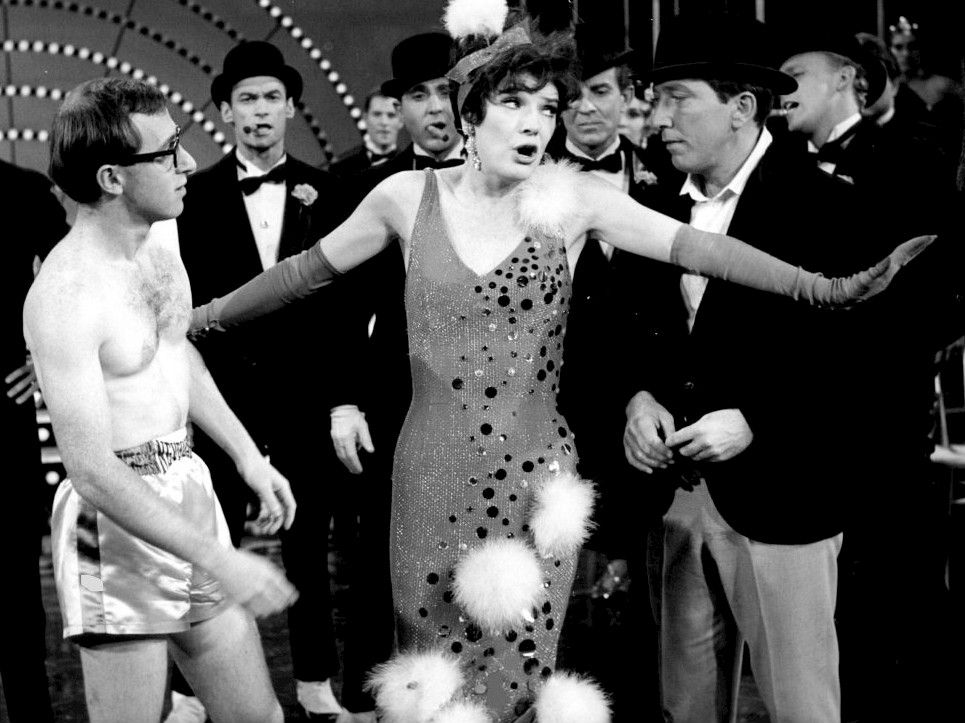
woody allen polly bergen andy williams andy williams show 1965

Woody Allen’s Baum

Woody Allen’s novel, WHAT’S WITH BAUM?, is so, so Woody Allen that it’s almost painful. But in a delightful way, if you’re a Woody Allen fan.

But is it a novel? Or is it a novella, which, as far as I’m concerned simply means “a short novel”? Or is it a really, really long short story?

Doesn’t matter. It’s vintage Woody Allen and it works.

81zylhllxdl. sl1500

All the familiar things are here in Baum, who is surely the author: a fear of everything, an obsession with death, a dislike of the country, a love of the city, complicated creative and family relations, an absurd sense of humor, brushes with hypochondria and ticks and suspicious-looking moles, and rivalry and reflexive falling-in-love.

woody allen hs yearbook
Woody’s high school yearbook photo

Leaving aside news and tabloids and gossip, Woody is not pathological or in need of a diagnosis; rather, he is a gifted adult, which is a gifted child who draws Social Security. He is also an HSP, or “highly-sensitive personality”. His protagonist Baum rubs against this, and against hysteria, and talks to himself – in public, even – and Allen glues this together in a light, readable, fun book.

johnny carson woody allen the tonight show 1964
Woody Allen with Johnny Carson when Carson was new at this, 1964

I’m not sure that it makes sense to try to dig out deeper meaning from WHAT’S WITH BAUM? It’s entertainment. I suppose if you want to stretch things, it shows how creative rivalries in the publishing industry work, or how romances and marriages and divorces come about.

woody allen polly bergen andy williams andy williams show 1965
Skin. Woody with Polly Bergen and Andy Williams on 1965 TV program

The most remarkable thing is that at 89, Woody Allen has not missed a beat. This is prime, even peak Allen at work. Sure, he’s working the same garden, not breaking new ground.

But he doesn’t have to. He’s proving that aging does not have to be a thing. Neither does adversity. What a lesson!

????????????????????????????????????

The Deadly Boob

Incompetence is the hallmark of most forms of government, but especially of fascism. It’s amazing how many people die despite how ineffective and contradictory that incompetence is.

Fascism tends to promote insiders and confused ideologues and, like American prep or WASP culture, nitwits famed for drinking the most in college who piled up contacts and connections, extroverts who did the most networking, who were the most handsome or beautiful, or who came from a name family, preferably one with “enough” money but not too much.

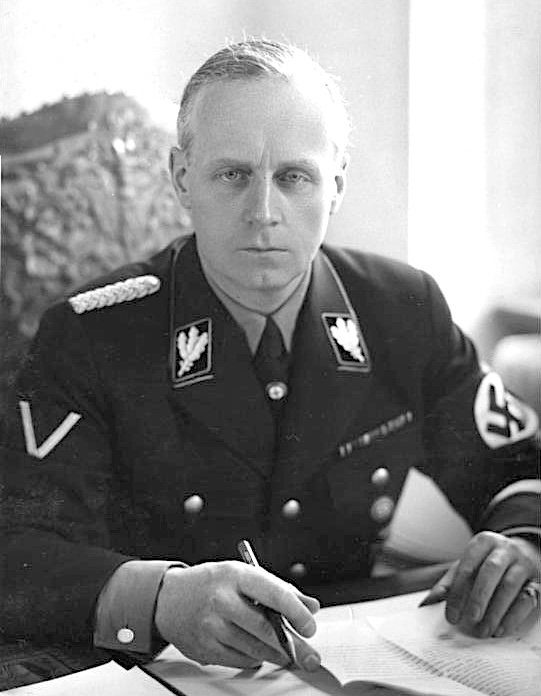
Joachim von (the “von” was an affectation he added gratuitously) Ribbentrop was one of these men.

71kyemeimhl. sl1440

Primary occupation before becoming Hitler’s Foreign Minister in 1938: spirits salesman. A distributor of luxury products. Sales of whisky, wine, champagne in Europe. Biographer Michael Bloch in RIBBENTROP says that he was very good at selling beverages. His mild, benign, passive, easy touch hit the spot.

But noodled into action by his ambitious wife, Ribbentrop edged his way into politics. A conservative by nature, he was seduced by Hitler as so many other blank young Germans were.

And Hitler was seduced by him. Hitler was impressed by his half-assed knowledge of foreign languages, his salesmanship, his worldliness.

Eventually, Hitler felt he owed Ribbentrop one after the salesman lent his own country estate to the intricate secret negotiations that got Hitler installed in power.

The initial prize: Ribbentrop got to be Hitler’s private man-of-the-world, doing informal diplomacy, which was important since Hitler loathed “professional diplomats” that he inherited from the Weimar days of nominal German democracy.

By 1938, Ribbentrop (and his wife!) got what he wanted: appointment as the top secretary of state.

????????????????????????????????????
Joachim von Ribbentrop

The end result was that he was hanged – it was a messy hanging, it took 10 to 20 minutes for him to die – by the Allies after the Nuremberg war crimes trials.

His primary crime was the primary crime of all the Nazi command. He had a hand, directly and indirectly, with the execution of the war and with genocide.

ribbentropdetentionreport

But as one of the lesser-known war criminals, the storyline Bloch tells of Ribbentrop is one of hopeless toadyism and of a hopeless passivity, a life not really lived despite wreaking havoc everywhere. Think of the Peter Sellers’ movie “Being There”, only with the Chauncy Gardener character as a Nazi. Things just seemed “to happen”.

Bloch quotes a neutral diplomat from Sweden as saying, ” . . . here was a man of very small mental stature, and moreover, rather ridiculous. It was an astonishing thought, that this man had all those years been Minister of Foreign Affairs of the German Reich.”

Hans Frank, a fellow Nazi, said of him at Nuremberg, “The poor fish . . . He is so untutored and so ignorant . . . I don’t see how he could have sold champagne let alone National Socialism . . . that poor simpleton . . . it was a crime on Hitler’s part to make him foreign minister of a nation of seventy million people.”

His other, more “famous” colleagues – Himmler, Goebbels, Goering, Speer – thought even less of him. Words like snob, haughty, idiot, friendless, careless, and stupid come up often. Even Hitler tired of him over time. “Keep him away from me,” was Hitler’s response to the banal and boring Minister.

So why did he stick? Because he was part of the way HItler arranged “his people”, playing one off another in the perpetual wargame of Nazi officialdom and administration. That all his colleagues denigrated him and hated him and even sometimes pitied him was vital.

That Hitler could trust him to passively yet noisily – droning on and on – support the Fuhrer was another factor. That Ribbentrop let Hitler set all German foreign policy himself was another.

And yet another factor was that Hitler could hypnotize Ribbentrop like a snake can a rabbit. It was a love affair.

In the end, Hitler had essentially appointed the guy who replenishes the products inside cigarette and soda vending machines, going from country to country instead of from bar to dorm, as his chief foreign officer. And people died.

pexels reneterp 13081553

pexels alexasfotos 6935835

Stuckness is a Worthy Goal

Americans seemingly fall out of the womb with a desire to optimize.

pexels harper sunday 3321416

We can never just be. We feel compelled to do. And to not just do, but to improve. And what we need to improve is some product. Even if the product isn’t a mousetrap or a juicy slice of software. Even if the product is ourselves.

This is so obvious that it feels obscene for me to even mention it.

pexels gabby k 6238039

We get MFA degrees if we want to write “creatively”. We get tutors if we want to learn how to play the piano. We hire “experts” to tell us how to landscape our gardens, coaches to train us, beauty “consultants” to advise us as to how to best dabble in alchemy and mythology, and so on.

Keep two things in mind: 1) Most of this shit is a scam on the part of overeducated narcissists to extract money from us with an easy career, and to make them feel more important to themselves than they really are and, more importantly, they know this in the depth of their souls; and 2) It’s all about that money. Nothing else.

Most people are lost and mono-dimensional.

51fj2peujtl

LOST IN PERFECTION: Impacts of Optimisation on Culture and Society is a blend of sociology and psychology, and is an academic series of essays on how our manic drivenness affects the air we breathe culturally.

I can’t possibly do justice to how we got this way, so I’ll just list a list: the protestant work ethic, science, capitalism, neoliberalism, engineering, protestant asceticism, envy, mimesis (copying others), the miasma of advertising, Frederick Winslow Taylor (the efficiency expert of the 1920’s who virtually measured worker sweat to determine optimal levels of productivity), the internet, social media, self-tracking by devices, self-branding, product branding (brand “stories”), aesthetic medical procedures, the death of meaning/the death of religion/the death of God/the irrelevance of philosophy, and on and on.

Cut to the bare bone, protestantism made it possible to “get to heaven” by how productive you are. And by how much money you have.

So we have to be productive. We have to do. We have to optimize. We have to succeed, we have to achieve, we have to step on the other guys’ heads as we scramble up the ladder to the Almighty.

Even though God is gone, we still have the mindset of scrambling and of existential perfection, molded by commercial forces to suit their own purposes. We can’t rest. We can’t sit still. We must never get stuck in our lives. To be stuck means someone else may take the last available seat in heaven.

Apparently heaven has a limited seating capacity.

pexels alexasfotos 6935835

The problem is that this way of living, and without any faith to boot, is inhumane, not fit for us, not fit for human life.

We are not those one-dimensional creatures who need an expert hand or academic credentials, even if all the forces on earth try to beat us down. We are creative even in our seeming stuckness.

But we run away from our inherent creativity because too many money-grubbing half-humans make it seem too difficult to grasp the bigger picture without their help.

LOST IN PERFECTION is a big enough book that I may revisit it.

I read a book a few years ago by a guy named Ogilvy – a business consultant in San Francisco, I think – entitled something like LIVING WITHOUT A GOAL. It was about how scandalous it seems to live free and easy without deep planning, without rationalizing our selves, without engineering outcomes.

You’re already in heaven. You just don’t know it because nobody wants you to know it.

pexels rdne 7713234

pexels davidmcbee 1546168

Ticky-Tacky Little Boxes

I grew up in what political activist and sanctimonious Quaker Malvina Reynolds called ticky-tacky little boxes. So I figured I needed to read Edward Berenson’s “PERFECT COMMUNITIES: Levitt, Levittown, and the Dream of White Suburbia.” Edward, too, grew up ticky-tackily.

version 1.0.0

My childhood homes might have been the sort built by Bill Levitt after World War II (and by my father, who was a contractor about that time), but they were decidedly NOT in a typical beehive suburb. They were in small towns or in the countryside. One was a Cape Cod, one a ranch house.

And they weren’t tacky because they weren’t in a beehive formation. I hope.

But is this tacky?:

levittownpa
Levittown, PA

Well, it’s not tacky if you were a veteran coming home from World War II or the Korean “conflict” and desperately needed a place to live and raise a family in a high-value situation.

Developer Bill Levitt jumped into the gap and mass-produced on-the-spot communities – cities, really – at low cost. He did it throughout the northeast and Maryland and eventually beyond. The houses were (mostly!) sturdy and well-built, and most residents loved them.

Most importantly, they could afford them. They were a good deal.

bill levitt poses with full page newspaper advertisements for levittown
Bill Levitt, financially blessed in 1964

But Berenson points out the fly in the soup, if that’s the expression. Levitt wouldn’t sell to Blacks.

A large part of “PERFECT COMMUNITIES” is about the racism of the postwar suburbs. They were uniformly inhospitable or unavailable to Blacks.

Levitt was a racist without being a racist but was a racist. Maybe. As laws and courts changed things, he begrudgingly opened up his communities.

pexels davidmcbee 1546168

But he was certainly not in the vanguard of the Civil Rights movement. He did what his overwhelmingly white veteran customers wanted, and kept his developments segregated.

This had the knock-on effect of making him more money. And what developer isn’t in the business to make money? They certainly aren’t in it to build critically-acclaimed domestic architecture. They build to a price point.

So should Levitt have pushed the racial integration boundaries? Yes. But dragging his feet was reality.

Levitt died penniless, a charity case patient in a hospital that he had years earlier helped to fund. He sold out to ITT, the master conglomerate merger hound of its day, in a very bad business decision. He loved his yacht – the third biggest private yacht in the world at the time – and his very non-Levittown estate. He loved drinking and partying and buying his wife jewelry.

So, in the end, no amount of money was enough for Bill Levitt anyway.

He would have had something more valuable at the end of his life if he had fought the times and built for all. And he would be even more fondly remembered today, even by songwriters.

pexels kelly 3845514