images

Kitsch Is For Morons. Sorry.

images

We are prone to saying “to each his own”.

Sorry. Some things are always stupid, shallow, and indicative of people stuck at age 7. If you favor the tasteless, you’re tasteless.

That is, sadly, most of us.

True culture takes a beating every time a new, more naive class enters the marketplace. It used to be that going to college creamed your brain enough that you knew that pink bathrooms and inspirational bumper stickers were somehow what they really are, which is bad. And indicative of really bad taste that made you a moron.

pexels wr heustis 310270240 14602844
graphic cancer

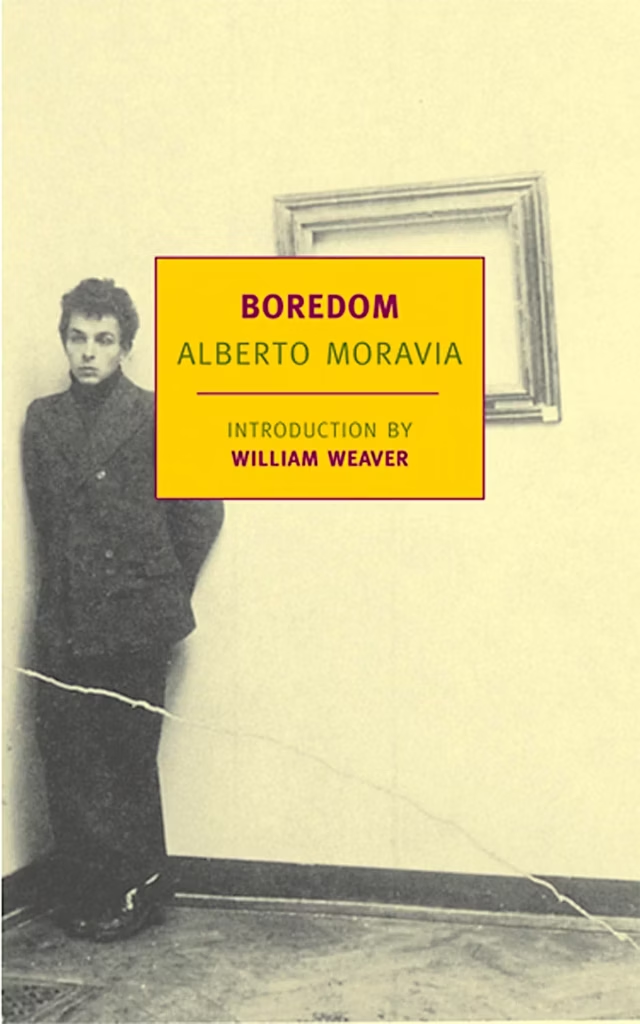
Tomas Kulka, in his Penn State Press book, says that kitsch is any art, music, architecture, or literature – think adult Harry Potter enthusiasts – that emits big emotions (puppies, children, barns, sunsets, waterfalls), easily identifiable subjects (like the prior list), and DOES NOT ENRICH the viewer on any level.

71iljjedz9l. sl1328

What does this do for you?

pexels boxfreelance 30552630
This Is Not Art

What does this say about you?

pexels wwarby 19613731
This says you’re a tasteless moron. And that if it’s in your house, maybe you drink too much.

Kitsch can be old women and men trying to suspend the aging process by applying Scott’s Turf Builder. It can be those metal civic buildings built solely at the lowest possible cost. It can be the color pink. It is anything superficial and easy. Way too easy.

Leave out irony, though. Irony can be high art. Sticking a tasteless plastic pink flamingo out front can be high art if done to confuse your neighbors or chase away gophers. Sticking a pink flamingo out front, if done by Andy Warhol, is an artistic statement of high calibre.

Leave out Susan Sontag’s and Walter Benjamin’s photography. (By the way, if you don’t know these people, you haven’t been to college, you have been to a glorified trade school.) Photography can be high art, just not as most people use it, which is to record every banal daily event, every ingestion, every defecation.

And film can be camp. Campy. The mid-’70’s TV series Kolchak: The Night Stalker, was seen by the masses as a straight horror show. Martin Mull’s Fernwood 2Nite/America 2Nite was seen by some as a “real” talk show. Actually, Kolchak was campy (Monster of the Week!”) and Mull – a great artist, btw – castrated Johnny Carson in broad daylight.

If you want to grow up before you die, buy and read, even if it gives you a cerebral vascular accident, a Philosophy 101 textbook. Or the Bible. Or Saul Bellow’s Henderson the Rain King.

It may hurt. That means it’s worthwhile.

This isn’t worthwhile:

pexels misra denizer 2150450936 31143469
Not worthwhile. Bolstered in its worthlessness by its pinkness. And in its futility.

People now don’t go to college to be schooled in the liberal arts. They go to college to get trained in highly specialized, inane careers. Those careers are stifling.

Thus stifled, those careerists need to recover with trips to Spain, political activism, music from their childhoods, being waited upon like kings and queens in restaurants where the workers get by with the help of marijuana and spitting in the soup, getting massages, binge watching TV, whatever.

And they say, “To each their own!” in defense of their wasted lives. They get away with it because we’ve all been trained since birth that we’re entitled, ENTITLED, to do, have, be, AND LIKE whatever we want. And that our tastes and educational level is on par with Leonard Bernstein.

We’ve been told this lie by the men and women of capitalism who hope to sell us something on the back of their keeping us little narcissistic boys and girls who have to be told by “experts” to stay in our rooms and, as Martin Mull sang in one of his songs, “think the things we thought when we were three.”

Fuck it, most people are a lethal threat to those who aspire to making real meaning. And to having real happiness.

Those who aspire to greatness are part of a remnant. A small and shrinking population of serious people doing and thinking serious things. For the sake of a deep, deep, orgasmic enjoyment.

And having more fun in doing so than any kitsch-dweller can imagine!

pexels peterdanthy 32481980
Losers

blips and ifs 1964.jpg!large

Stuart Davis, Girly Tight Pants?

Stuart Davis began as an artist of the Ash Can School, and ended up a father of 1960’s pop art. Pretty good for a dedicated Marxist.

davis garage no 1
Stuart Davis, “Garage No. 1”, 1917

Davis’ trajectory from Ash Can daily life art, often of poverty and the poorer commercial sections of New York City, quickly morphed into a commercial and advertising theme. By 1921’s “Lucky Strike” he was well on his way to critiquing modernity’s affair with stuff and with banal products, a critique that he hoped would sharply point out the basic poverty of capitalism.

davis stuart lucky strike 1921
Stuart Davis, “Lucky Strike”, 1921

It’s worth pointing out that these early collage-like paintings were also a bit cubist, since Stuart was first exposed to Picasso in the famous (or infamous) 1913 Armory Show of modernist art, where his own work was shown.

Then the politics bug bit Davis, and he spent much of his artistic energies in organizing artists into labor blocs during the Great Depression. He was part of the Federal Arts Project of FDR’s Work Projects Administration, and was paid by the government for his murals and other work, a scheme he highly approved of not just for himself but for all his colleagues.

archives of american art stuart davis 2053 (cropped)
Davis in 1939, working on a public mural

These large, abstract, poster-like statements led him down the path to a jazz fever, and he started painting lively, popular music themes just about the time Joseph McCarthy began looking for “reds” – communists, Marxists – everywhere. There is no sign that Davis was ever directly confronted in hearings, but his earlier critical work was shown less and less, and major institutions began to avoid purchases of his work.

So did he gravitate toward happy, frantic jazz paintings to save his career?

In any case, in an irony of ironies, the CIA began covertly supporting abstract art as a sign of American openness toward new and innovative things, while the Soviet Union was a closed system and only realism – government approved realism – was allowed. So the U.S. government was financially supporting Davis, directly and not so directly, in the 1950’s.

For the first time, Davis, who never cared much for money or painting-for-dollars, was financially secure.

By his death in 1964 at age 71, he was doing things like “Blips and Ifs” below. It’s emblematic of his mature style.

With his late-Beatnik era title, was he catching up to the pop artists? Or was he a father of them?

Ever elusive, ever his own man. A mystery. An ironic one.

blips and ifs 1964.jpg!large
Stuart Davis, “Blips and Ifs”, 1964. Why “TIGHT”? Do I see “girly” and the start of “pants”?

81cmxbkwlwl. sl1500

Holding Yourself Back From Greatness?

Director Terrence Malick’s BADLANDS is one of the greatest movies ever made. His next movie, DAYS OF HEAVEN, is close to great. After 15 years more or less hiding, his third movie, THE THIN RED LINE, is good.

It went downhill from there.

81cmxbkwlwl. sl1500

John Bleasdale’s The Magic Hours makes it clear that Malick’s BADLANDS barely got made. It had a non-union crew, had no decent financing, had trouble getting distribution once it was made, and nearly burned to death one of the crew when a house fire scene went (incompetently) awry. This is the story of an indie film that had Malick begging money from friends, colleagues, and parents.

badlands movie poster

We love these tough stories when they turn out well. BADLANDS turned out well, won awards, has worn fame well, and has gone down in filmmaking history. It established Terrence Malick as a filmmaking genius at a young age. Perhaps to his detriment.

How do you follow up an early act of genius?

tm07
Malick in a cameo scene in BADLANDS

Loosely based upon a real murder spree by a young couple, stars Sissy Spacek, Martin Sheen, and Warren Oates – with Malick as two different minor characters; money was tight – fill out the lushly-shot and atmospheric movie with murderous psychotic and erotic blankness.

pexels brett sayles 10404245

When not randomly killing, they dance to music on a car radio. They plan their future. They dream of Canada or Mexico. They shoot fish. Sheen’s character Kit shoots bounty hunters.

pexels thegenner 17985208

Malick makes violence and murder mindless. Natural. Normal. Psychosis has no boundaries. Being psychotic is a lot like hanging laundry on a clothesline: banal.

And it’s brilliant. Haunting.

DAYS OF HEAVEN is set just before World War I in the plains of Texas. A wealthy wheat farmer brings in trainloads of poor immigrants to act as his peasants. Again, the movie is wonderfully atmospheric – Malick is a master artist – but it’s rather a standard story of love and jealousy and eventual murder.

daysofheavenposter

HEAVEN is a great movie because of its feel and because of the voice-over by young actress Linda Manz. Spacek did a voice-over for BADLANDS, too.

These narrations acted as a kind of crutch for Malick. To his credit, he recognized that and tried to minimize using them in the future. But in his first two movies, wow, they make them really work. Spacek’s unique gravelly voice, and Manz’s even more gravelly 14 year old’s voice, are the things of dreams.

And then THE THIN RED LINE came about 15 years after his two classics. Bleasdale makes it clear that after two difficult acts of genius, Malick may have withdrawn because of the pressure to follow up.

Malick did follow up. Nothing he has done has been bad. But, to me at least, it’s the common story of genius slowly petering out the more and more we expect of it.

I see the same trajectory in novelist Don DeLillo’s career, only without the acts of genius frontloaded like they are with Malick. In DeLillo’s case, WHITE NOISE was a mid-career shooting star. Then he was told that he was brilliant, believed it, and tried too hard to write big-themed novels: the history of garbage in UNDERGROUND and a re-formulation of the JFK assassination in LIBRA.

But we have what we have, some great movies and some great books. We need to accept that not everything can always be perfect, and perfection is seldom repeatable.

Do artists retreat on purpose, to escape impossible expectations? Or is it mere entropy? Or erosion? Or overreaching?

Or, as in HEAVEN, is it . . . locusts, external factors, time and aging alone?

pexels jeffrey czum 254391 3330118
very much the farmer’s house in DAYS OF HEAVEN

pexels ron lach 9893523

Entertainment vs. Art

“Open your mind. Figure out things for yourself.” These are the most frightening sentences to most people.

red room
David Lynch’s Red Room in the various TWIN PEAKS series and movie

Most people either go to school, go to work, or are retired. And then they die.

trinity test
The Trinity test, the first nuclear detonation in history. Hell unleashed in TWIN PEAKS: The Return

These normal people do not want to be challenged when they get home at night. They want to overeat, have some pot or booze, and fall asleep while watching “COLUMBO”, where everything is spelled out clearly and tied with a nice ribbon.

This is called “entertainment”.

Entertainment consists of things you don’t have to think about. The same damned photos. The same food. The same route. Algorithms that all direct the same ads to you. Portaits of horses and doggies and paintings of barns and waterfalls. The same damned symphonies – the “warhorses” – and the same damned Paul McCartney.

And sports. The whole point of sports is that there WILL be a definite conclusion. There WILL be a plot, even though the result will vary. (Sports fans are always disappointed by ties. There’s no conclusion.)

Oh, look! Paul has another album out at 97! Isn’t he amazing! Yankees 7, Mets 2. The murderer was the shifty-eyed guy on “Mannix”. Bach always sounds like the Bach you were “exposed to” – a telling phrase, a damning phrase! – in 4th Grade music class. Yup, that’s my dog. Looks just like him, I’d know him anywhere! Here’s a photo of my family again, yes, I have one! Republicans are the problem, Democrats are the problem, I know, I’m a moron, but this is what I firmly believe, say stuck people.

And there’s nothing wrong with this. We all have to learn, work, and die. We all need to unwind. And we all have to be mindless at times and recite the given script.

However . . .

giantno
The Fireman in TWIN PEAKS, one of the entities who controls the universe. And you.

There is an alternative to eating predigested commercial pablum. It takes effort, not just passive copying, not just comfort food.

You have to WORK with the author or screenwriter or composer or artist, and be uncomfortable while you help “write” the stories in your own mind.

This is the realm of being fully human. This is the realm of true happiness.

And this is the world of abstract art, modern art music or jazz, literary or experimental writing. Things that take work. Things that make you uncomfortable. Things that make you frustrated. Things that make you . . . think.

To think is to be fully human and fully yourself. And happy. Maybe for the first time in your life.

I just read Clarkson University graduate John Thorne’s book, OMINOUS WHOOSH: A Wandering Mind Returns to Twin Peaks.

51y3py4izfl. sl1491

One of the things Mr. Thorne discusses is the notion that “Twin Peaks” fits its scenes and stories (as such) onto film the way most people surf the internet or “doomscroll”. At random. In little bits. In a hashlike-fashion. With static. Very much unlike an overtime goal that decisively wins a game.

Fragmented. Distracted. Moving from one little interesting nub to another. As David Letterman once described, sort of, how he surfed cable TV, “I switch from channel to channel, see a breast, watch awhile, then move on.”

Sometimes the channels tightly cohere. You have reached the shopping channel tier, perhaps, or the weird religions sphere. Everything blurs together, but they’re about the same and tell about the same story, right?

Sometimes, the channels are randomly squashed together. Smug and condescending PBS next to The Gun Channel next to the Look-At-The-Newts-Mating-In-A-Lovely-Spring-Pond nature channel.

Here is a gallery full of my abstract artwork. Notice how it coheres as abstract, yet each individual painting – David Lynch was an abstract artist, mainly a painter, and an abstract filmmaker – is . . . random in its effects:

271183215 10159755532060747 8948259227172787468 n copy
Art by Gregg Fedchak, in a Lynchian red room. Photo via the Frederic Remington Museum. Study group in action.

And here is the other aspect of “Twin Peaks”: it’s not just doomscrolling or breast-scrolling, it’s not just entertainment to kill time, it’s art to fulfill your humanity and to bring you a sniff of happiness – true happiness.

270938082 10159755530745747 1563090405532852767 n copy
Photo by the Frederic Remington Museum. Paintings by Gregg Fedchak

So the various “Twin Peaks” are surfing-like, but not just random. Each “episode” or scene invites you to help make doomscrolling into a lush and verdant field that you have helped plant.

pexels ron lach 9785021

Suddenly, you’re not just a passive consumer of entertainment, but like The Fireman in the photo above. A co-creator of a universe. Your own universe.

Perhaps your universe is disturbing. Perhaps your inner world is a lot like these scurrying “Woodsmen” that Lynch created:

conveniencestore
The evil Lynchian Woodsmen

Get used to your own Red Room.

Creativity. It’s good. Which is why you’ve carefully crafted a banal world of sports and politics and “Columbo”. Because you’re afraid you don’t deserve to be happy?

pexels ron lach 9893523
a Red Room

81iaumkeoul. sl1500

David Lynch, Dreaming

I worked with a woman whose family would pack a lunch and go to the local insane asylum Sunday afternoons after church. It was entertainment for them.

Viewing a Lynchian project is like visiting that asylum.

david lynch cannes 2017
David Lynch

Lynch died of emphysema and a heart attack in January, after being forced to evacuate his compound during a California forest fire. He left behind a rich and disturbing body of work that either makes sense or doesn’t make sense.

eraserhead
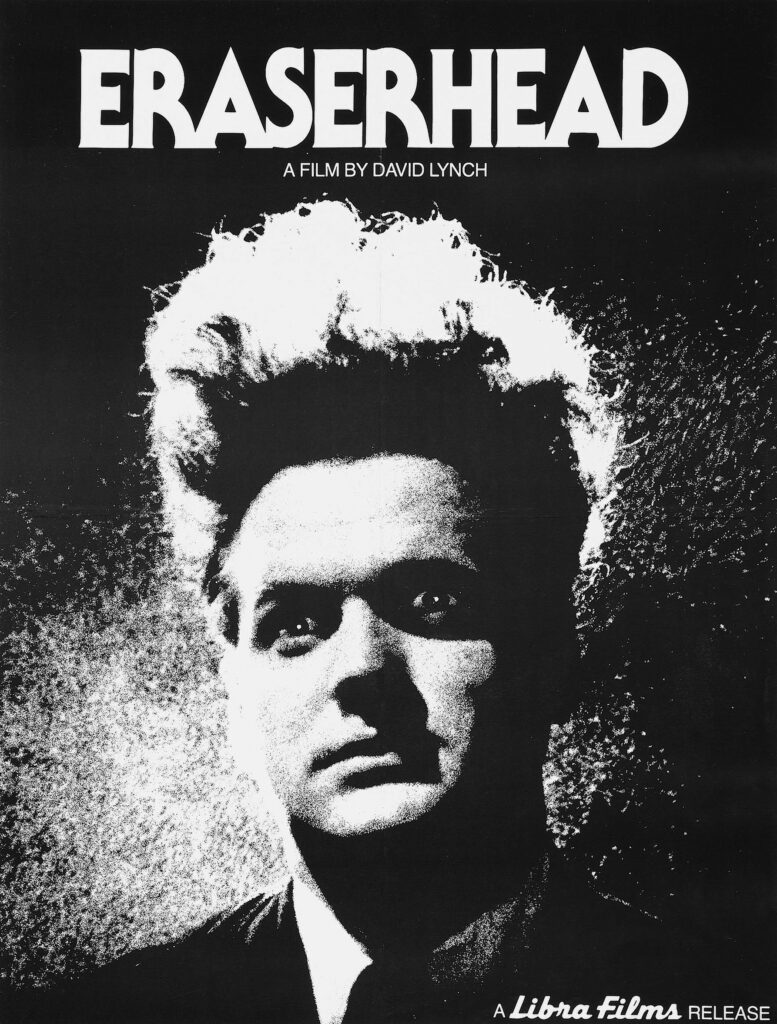
Jack Nance in Lynch’s first “real” movie, “ERASERHEAD”

He directed the 1980’s DUNE, THE ELEPHANT MAN, BLUE VELVET, and then TV: TWIN PEAKS made him a household name.

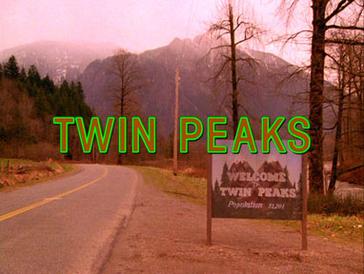
PEAKS was probably his most coherent work because he had surprisingly little to do with it. It almost made sense: a murder mystery. This sensibleness made him back off from it. That, and his relative lack of control over the project. ABC was not TWIN PEAKS-friendly.

twinpeaks openingshotcredits

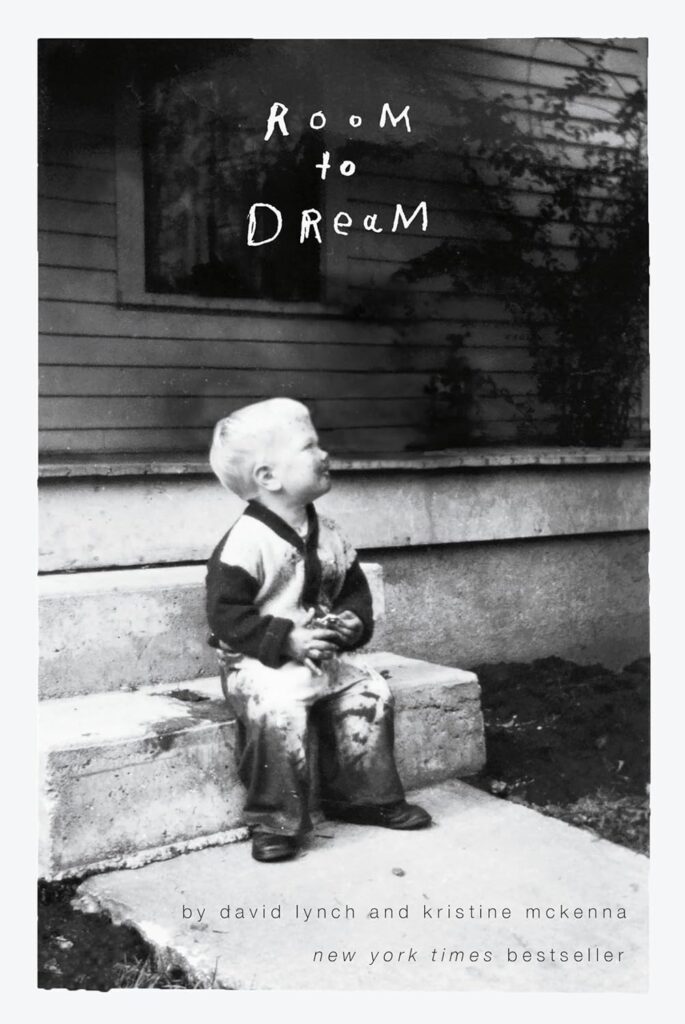
ROOM TO DREAM by Lynch and biographer Kristine McKenna is an unusual book. He and McKenna alternate authorship in an unexpectedly-yet-expectedly vertiginous way. Because Lynch can’t do anything normally.

81iaumkeoul. sl1500

There are two other problems with the book. One is its oddly promotional tone.

Everybody finds Lynch charming. Friendly. A genius. A great director. A great painter. A great writer. Hard-working. Busy. A busy little beaver, always creating. And a great musician, too, by the end of his life.

Yet where are the non-adoring actors who disappeared from his life over time? Did they think he was a swell peach, a genius of a peach, too?

The second problem is that we learn nothing about Lynch that we didn’t learn before.

david lynch cannes

Why was he such a heavy smoker? Why was he a chain-marry-er? Why so many love affairs? Why was he so obsessive? Was he autistic? What in hell were his relationships with his children (by many different wives) like? Why was he taken in by the meditation industry? Was he a babe, an innocent, or a true believer? Why were his “products” purposely abstract, and bizarre, and surreal, and, well, plot-less?

Could he not think linearly? Or did he not want to?

Were his dreams insane?

And why did he avoid commercial success after Mel Brooks’ – yes, it was Mel Brooks’ project! – THE ELEPHANT MAN?

Man, this guy needs an objective biography from a bare-knuckles brawler of a biographer.

Then again, maybe he’s too obscure a figure for that treatment.

A slight clue to what is going on might be the painter Edward Hopper, Lynch’s favorite artist.

Hopper was a specialist of atmosphere, of scene-setting, of feeling, of emotion. Maybe all Lynch wanted to do was make you smell the pine-tingling aroma of the Pacific Northwest, or an old factory’s rusting pipes, or an actress’s sweat as she masturbates on-camera, as Naomi Watts did in his MULHOLLAND DRIVE?

In the late 20-teens TWIN PEAKS: THE RETURN (Twin Peaks 3rd Season, Showtime) there’s an episode where a scene is set in a small-town radio station’s outer office. The room, the office, and the characters are from a Hopper painting. It’s a great homage to Hopper from a fan.

Is scene-setting enough for a movie or a TV show, though?

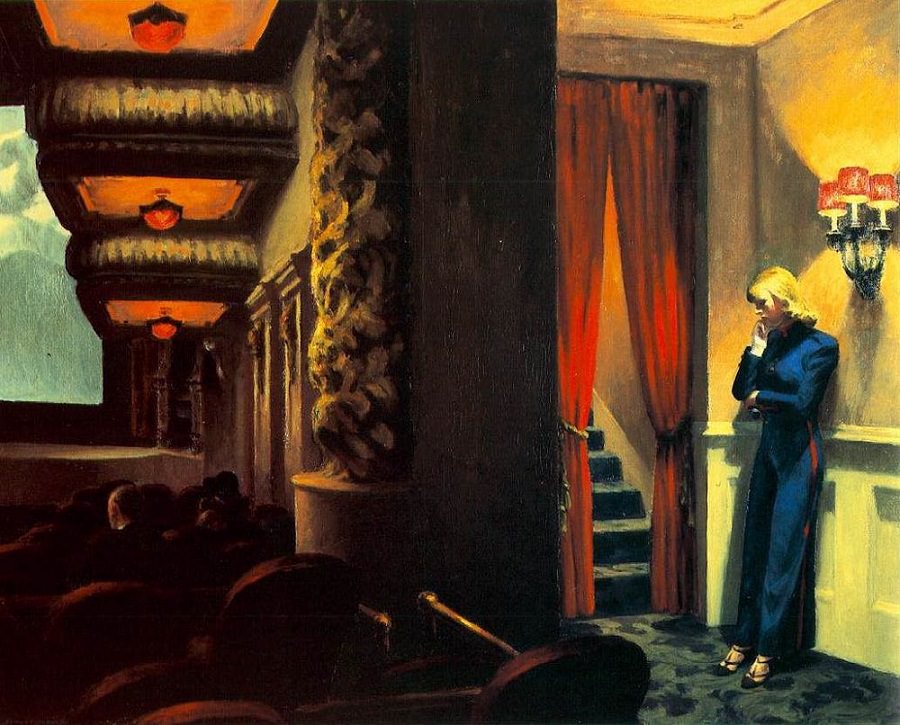
Here’s a movie theater usher in another Hopper, pondering the same question:

newyork movie edward hopper 1939
Edward Hopper, “New York Movie” (1939)

egon schiele fourtrees

An “Easier” Egon Schiele

A less forbidding Egon Schiele painting:

egon schiele fourtrees
Four Trees by Egon Schiele, early 20th Century

His wife died during the Spanish Flu epidemic, while six months pregnant. He died of the flu three months later. It would be nice to have another 60 or 70 years worth of work from him.

The man himself:

trckaschiele1
Egon Schiele