pexels jonathan valdes 286676880 30284551

Classical Foreplay vs. Pop Premature Ejaculation

And you thought music was just music.

Sometimes a cigar is just a cigar, Freud may or may not have said. But music is often sex.

martin van maele francion 15
We’re done with foreplay, put down the damn lute.

Music is sex in a gently sublimated form. It’s intellectualized and disguised and sometimes rubbed the wrong way, but all forms of music almost always lead to some kind of climax or resolution.

Even a simple little ditty is a diddly.

61cu+eanw5l. sl1350

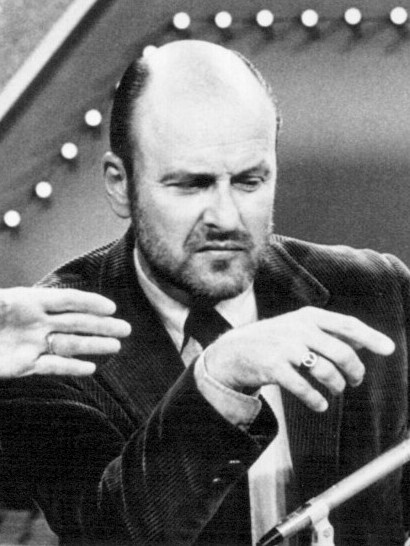
Conductor Herbert von Karajan, he of Nazi Party fame and controversy, felt all kinds of things about the stringed armies he led and the music they produced. His best biographer, Richard Osborne, mentions in passing that von Karajan thought that music was sexual, and, beyond a doubt, sensual in nature, not just mere high-class entertainment.

herbert von karajan 1963
Herbert von Karajan, in motion.

American philosopher Allan Bloom, in his magisterial bestseller THE CLOSING OF THE AMERICAN MIND: How Higher Education Has Failed Democracy and Impoverished the Souls of Today’s Students, is even more explicit about sex and music.

71lmvgv7vel. sl1280

” . . . rock music has one appeal only,” Bloom says, “a barbaric appeal, to sexual desire – not love, not eros, but sexual desire undeveloped and untutored.”

How to reach mature love and, indeed, even eros, a refined, elite, patient foreplay?

Bloom prescribes classical music.

internationales management gespräch allan bloom (3x4 cropped)
Allan Bloom, 1989.

Why classical? Because it demands patience, work, time, and trouble. Because it forces listeners to listen attentively or else to fall asleep and fart loudly in a large concert hall. Because classical music tends to really, really build to a climax.

That building, that complex admixture of boredom and excitement, is just like sexual foreplay. Long, fun foreplay, once you have the patience to master and enjoy it.

Herbert von Karajan loved conducting Ravel’s BOLERO because, as Bloom says, it’s the “one piece of classical music that is commonly known and liked (by young people).” But von Karajan didn’t make a steady diet of BOLERO. He didn’t program it everywhere at every time. And Ravel himself disowned and mocked his composition as too simplistic and commercial. Sort of a long pop song.

But von Karajan knew its simple power. The power of seduction.

When a young Roy Orbison, future pop and rock star, was struggling to break out as a power songwriter, unhelped by his looks at a time when looks were becoming all that mattered in pop culture (not talent or ability), his record producer handed him an LP. It was of Ravel’s BOLERO. It may have even been a von Karajan recording.

“Make all your music sound like this,” Orbison’s producer told him. No fool, Roy took the advice.

He promptly started pooping out hit after hit. His songs build magnificently toward climaxes.

The only problem is that they climax after only 2 or 3 or 4 minutes. Usually while you were in the back seat of your father’s ’61 Ford. Hardly conducive to mature, satisfying love.

orbison1987
Roy Orbison, 1987.

“In short,” Allan Bloom says of his students who were untutored in the ways of true love, “life is made into a non-stop (by quickie pop music) commercially prepackaged masturbational fantasy.”

Orbison, who was one of the few rock stars who could have been an opera singer had he so chosen, presumably was happy with his fate. So was Elvis with his hips, the commercially pliable Beatles, and so on.

Today we swim in an overheated pool of come-come-come quickly-quickly-quickly at the speed of light, and not just because of our music choices.

I sense that Bloom is correct. Real eros takes time and patience.

Is it too farfetched to believe that dropping classical music appreciation classes in public schools has made us limp lovers?

pexels jonathan valdes 286676880 30284551
Ole!

images

Kitsch Is For Morons. Sorry.

images

We are prone to saying “to each his own”.

Sorry. Some things are always stupid, shallow, and indicative of people stuck at age 7. If you favor the tasteless, you’re tasteless.

That is, sadly, most of us.

True culture takes a beating every time a new, more naive class enters the marketplace. It used to be that going to college creamed your brain enough that you knew that pink bathrooms and inspirational bumper stickers were somehow what they really are, which is bad. And indicative of really bad taste that made you a moron.

pexels wr heustis 310270240 14602844
graphic cancer

Tomas Kulka, in his Penn State Press book, says that kitsch is any art, music, architecture, or literature – think adult Harry Potter enthusiasts – that emits big emotions (puppies, children, barns, sunsets, waterfalls), easily identifiable subjects (like the prior list), and DOES NOT ENRICH the viewer on any level.

71iljjedz9l. sl1328

What does this do for you?

pexels boxfreelance 30552630
This Is Not Art

What does this say about you?

pexels wwarby 19613731
This says you’re a tasteless moron. And that if it’s in your house, maybe you drink too much.

Kitsch can be old women and men trying to suspend the aging process by applying Scott’s Turf Builder. It can be those metal civic buildings built solely at the lowest possible cost. It can be the color pink. It is anything superficial and easy. Way too easy.

Leave out irony, though. Irony can be high art. Sticking a tasteless plastic pink flamingo out front can be high art if done to confuse your neighbors or chase away gophers. Sticking a pink flamingo out front, if done by Andy Warhol, is an artistic statement of high calibre.

Leave out Susan Sontag’s and Walter Benjamin’s photography. (By the way, if you don’t know these people, you haven’t been to college, you have been to a glorified trade school.) Photography can be high art, just not as most people use it, which is to record every banal daily event, every ingestion, every defecation.

And film can be camp. Campy. The mid-’70’s TV series Kolchak: The Night Stalker, was seen by the masses as a straight horror show. Martin Mull’s Fernwood 2Nite/America 2Nite was seen by some as a “real” talk show. Actually, Kolchak was campy (Monster of the Week!”) and Mull – a great artist, btw – castrated Johnny Carson in broad daylight.

If you want to grow up before you die, buy and read, even if it gives you a cerebral vascular accident, a Philosophy 101 textbook. Or the Bible. Or Saul Bellow’s Henderson the Rain King.

It may hurt. That means it’s worthwhile.

This isn’t worthwhile:

pexels misra denizer 2150450936 31143469
Not worthwhile. Bolstered in its worthlessness by its pinkness. And in its futility.

People now don’t go to college to be schooled in the liberal arts. They go to college to get trained in highly specialized, inane careers. Those careers are stifling.

Thus stifled, those careerists need to recover with trips to Spain, political activism, music from their childhoods, being waited upon like kings and queens in restaurants where the workers get by with the help of marijuana and spitting in the soup, getting massages, binge watching TV, whatever.

And they say, “To each their own!” in defense of their wasted lives. They get away with it because we’ve all been trained since birth that we’re entitled, ENTITLED, to do, have, be, AND LIKE whatever we want. And that our tastes and educational level is on par with Leonard Bernstein.

We’ve been told this lie by the men and women of capitalism who hope to sell us something on the back of their keeping us little narcissistic boys and girls who have to be told by “experts” to stay in our rooms and, as Martin Mull sang in one of his songs, “think the things we thought when we were three.”

Fuck it, most people are a lethal threat to those who aspire to making real meaning. And to having real happiness.

Those who aspire to greatness are part of a remnant. A small and shrinking population of serious people doing and thinking serious things. For the sake of a deep, deep, orgasmic enjoyment.

And having more fun in doing so than any kitsch-dweller can imagine!

pexels peterdanthy 32481980
Losers

pexels vikram upadhyay 1093402497 21638172

The Fabulous Phonograph

You can’t kill music in your home, although many have tried to beat it to death.

s l1600

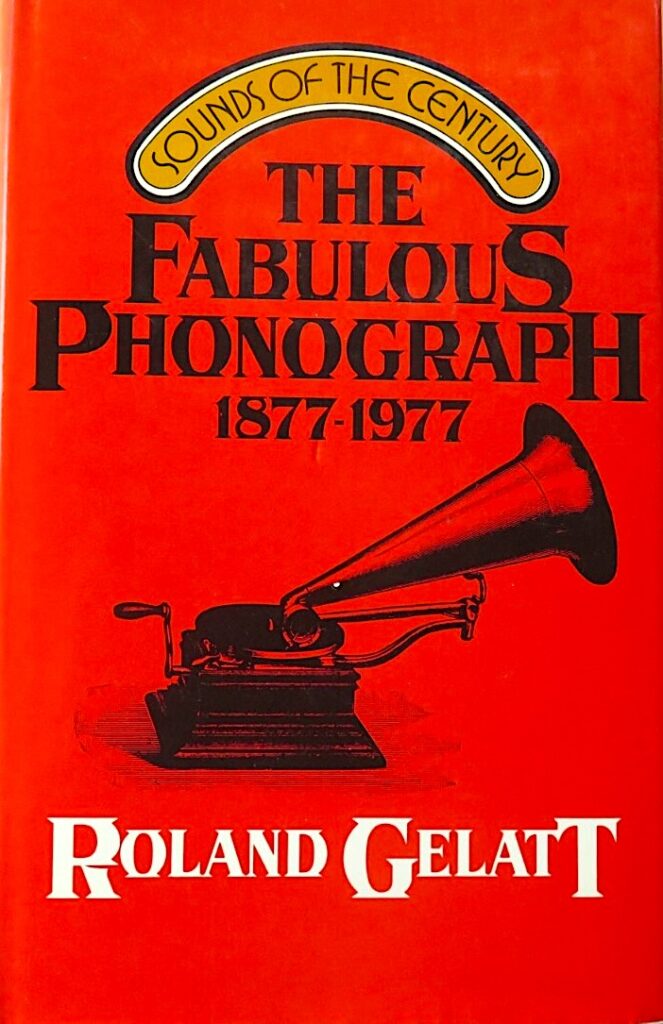
Roland Gelatt’s epic THE FABULOUS PHONOGRAPH 1877-1977 ends its story in 1977 because that’s when this now-rare book was published in its second edition.

pexels vikram upadhyay 1093402497 21638172
about 1900

It’s a shame that it ends when it does because 1977 is about when digital music and MTV and eventually streaming started, and before long, vinyl made a startling comeback. Now, in 2025, there are even signs that CD’s are making their own comeback.

And, of course, tubes have long been “back” among the most serious – or most deranged – audiophiles.

Why tubes now? Because like vinyl, they sound better than sterile 1’s and 0’s.

stax srm t8000 3 copy
new production vacuum tubes from a STAX electrostatic headphone amp

But believe me, the history of home audio is already dense enough without adding its most recent, and volatile, years.

sr 0057mkii a2f3cbeb 0560 4700 88ff fc25a1d43245 1024x1024@2x copy.jpg
STAX L500 electrostatic headphone, basic design late 1970’s to current, Japan

You would only read this book if you were a nut, provided you could source it from interlibrary loan or a used book store. Because it is suffocatingly, if entertainingly, detailed.

I am so sick of tracing the path from gramophone to Edison cylinder to shellac to Nazi German magnetic tape and tape recorders to zonophones to record players to stereo to headphones to cassettes (also making a mild comeback today!). I am sick of following the massive and ridiculous trade wars and obscure dead artists and the fall and the rise and the even more advanced fall of recorded classical music.

pexels foteros 352505

This is a reference book, a textbook, and very much the sort of excellent writing we had before about 1990, scholarly yet accessible to almost-normal people.

There have been many calls to revise THE FABULOUS PHONOGRAPH, but I think it’s too late. Nobody writes this well now. The two styles of writing would mix like water and oil. Or like digital and analog.

But I did learn about Nipper, the little dog in the painting and ad logo, HIS MASTER’S VOICE.

Why was the dog named “Nipper”? Because he was a nasty little S.O.B. who would nip at the heels of household visitors.

His burial site was under a mulberry tree in Kingston-On-Thames, and it was honored with a plaque in 1949. A plaque on a bank that replaced the mulberry now honors Nipper, the little bastard.

And so the record goes round and round . . .

pexels samfollsf 34159730
Nipper

81iaumkeoul. sl1500

David Lynch, Dreaming

I worked with a woman whose family would pack a lunch and go to the local insane asylum Sunday afternoons after church. It was entertainment for them.

Viewing a Lynchian project is like visiting that asylum.

david lynch cannes 2017
David Lynch

Lynch died of emphysema and a heart attack in January, after being forced to evacuate his compound during a California forest fire. He left behind a rich and disturbing body of work that either makes sense or doesn’t make sense.

eraserhead
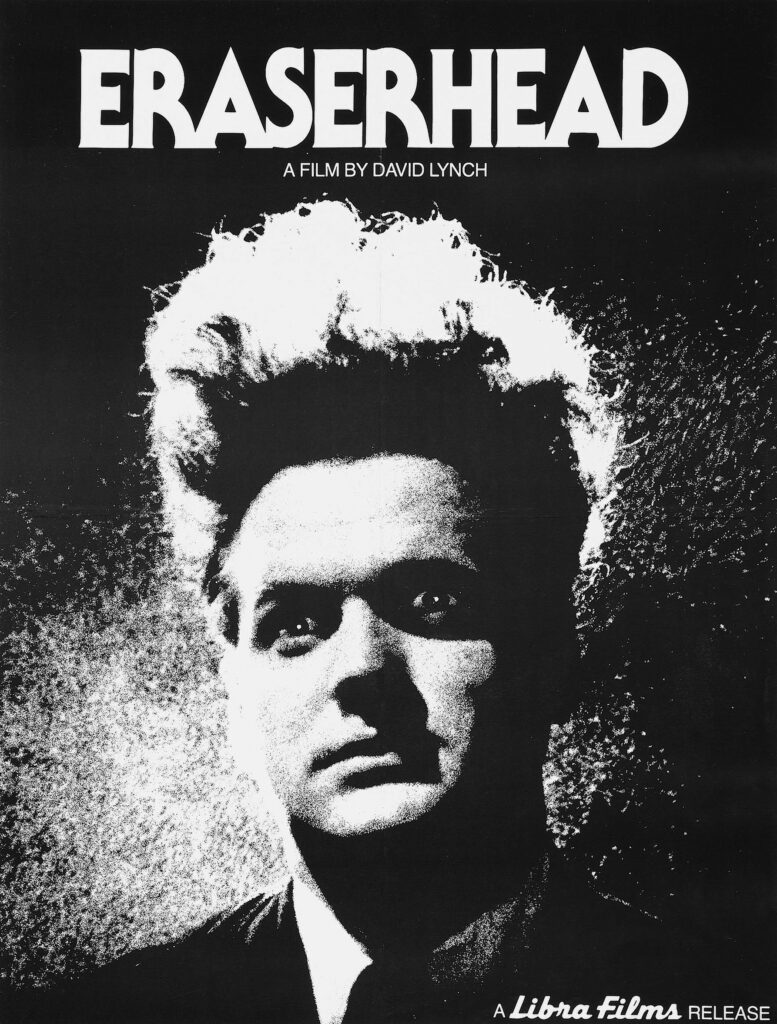
Jack Nance in Lynch’s first “real” movie, “ERASERHEAD”

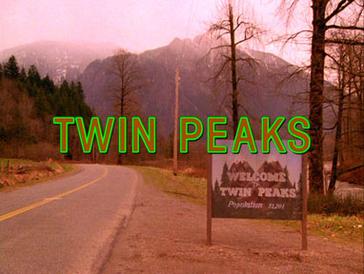
He directed the 1980’s DUNE, THE ELEPHANT MAN, BLUE VELVET, and then TV: TWIN PEAKS made him a household name.

PEAKS was probably his most coherent work because he had surprisingly little to do with it. It almost made sense: a murder mystery. This sensibleness made him back off from it. That, and his relative lack of control over the project. ABC was not TWIN PEAKS-friendly.

twinpeaks openingshotcredits

ROOM TO DREAM by Lynch and biographer Kristine McKenna is an unusual book. He and McKenna alternate authorship in an unexpectedly-yet-expectedly vertiginous way. Because Lynch can’t do anything normally.

81iaumkeoul. sl1500

There are two other problems with the book. One is its oddly promotional tone.

Everybody finds Lynch charming. Friendly. A genius. A great director. A great painter. A great writer. Hard-working. Busy. A busy little beaver, always creating. And a great musician, too, by the end of his life.

Yet where are the non-adoring actors who disappeared from his life over time? Did they think he was a swell peach, a genius of a peach, too?

The second problem is that we learn nothing about Lynch that we didn’t learn before.

david lynch cannes

Why was he such a heavy smoker? Why was he a chain-marry-er? Why so many love affairs? Why was he so obsessive? Was he autistic? What in hell were his relationships with his children (by many different wives) like? Why was he taken in by the meditation industry? Was he a babe, an innocent, or a true believer? Why were his “products” purposely abstract, and bizarre, and surreal, and, well, plot-less?

Could he not think linearly? Or did he not want to?

Were his dreams insane?

And why did he avoid commercial success after Mel Brooks’ – yes, it was Mel Brooks’ project! – THE ELEPHANT MAN?

Man, this guy needs an objective biography from a bare-knuckles brawler of a biographer.

Then again, maybe he’s too obscure a figure for that treatment.

A slight clue to what is going on might be the painter Edward Hopper, Lynch’s favorite artist.

Hopper was a specialist of atmosphere, of scene-setting, of feeling, of emotion. Maybe all Lynch wanted to do was make you smell the pine-tingling aroma of the Pacific Northwest, or an old factory’s rusting pipes, or an actress’s sweat as she masturbates on-camera, as Naomi Watts did in his MULHOLLAND DRIVE?

In the late 20-teens TWIN PEAKS: THE RETURN (Twin Peaks 3rd Season, Showtime) there’s an episode where a scene is set in a small-town radio station’s outer office. The room, the office, and the characters are from a Hopper painting. It’s a great homage to Hopper from a fan.

Is scene-setting enough for a movie or a TV show, though?

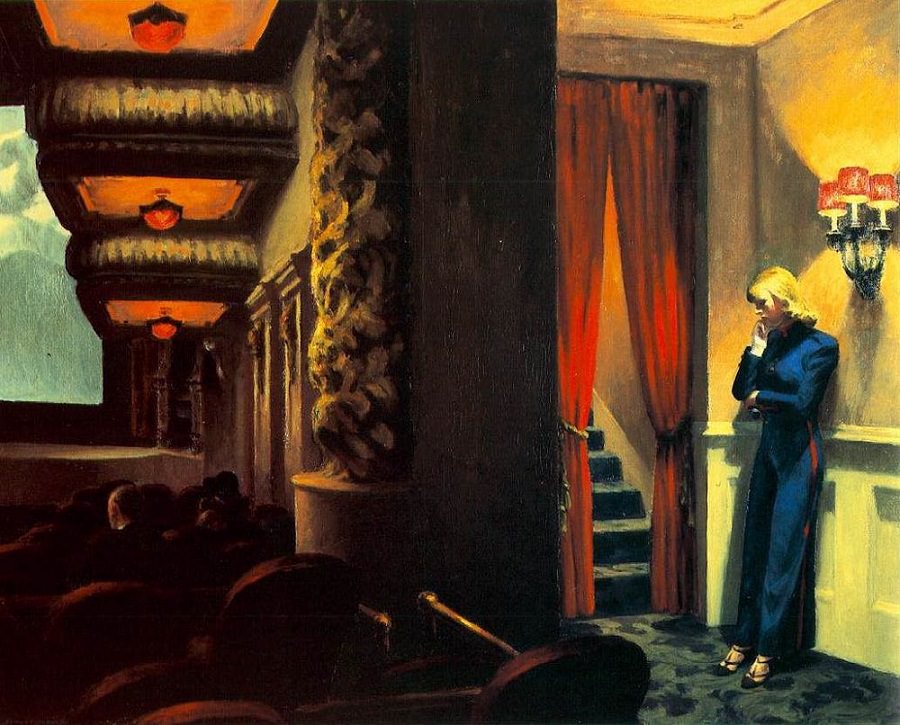
Here’s a movie theater usher in another Hopper, pondering the same question:

newyork movie edward hopper 1939
Edward Hopper, “New York Movie” (1939)

61kt4pg mjl. sl1500

Whiskey, Cigarettes,Sex, and Perfection

The life of a classical music musician is in some ways wilder than the life of a rock star.

The anxiety is heightened by the fact that rock musicians can thrive on a lot of musical and personal mistakes. Mistakes can get classical musicians canned.

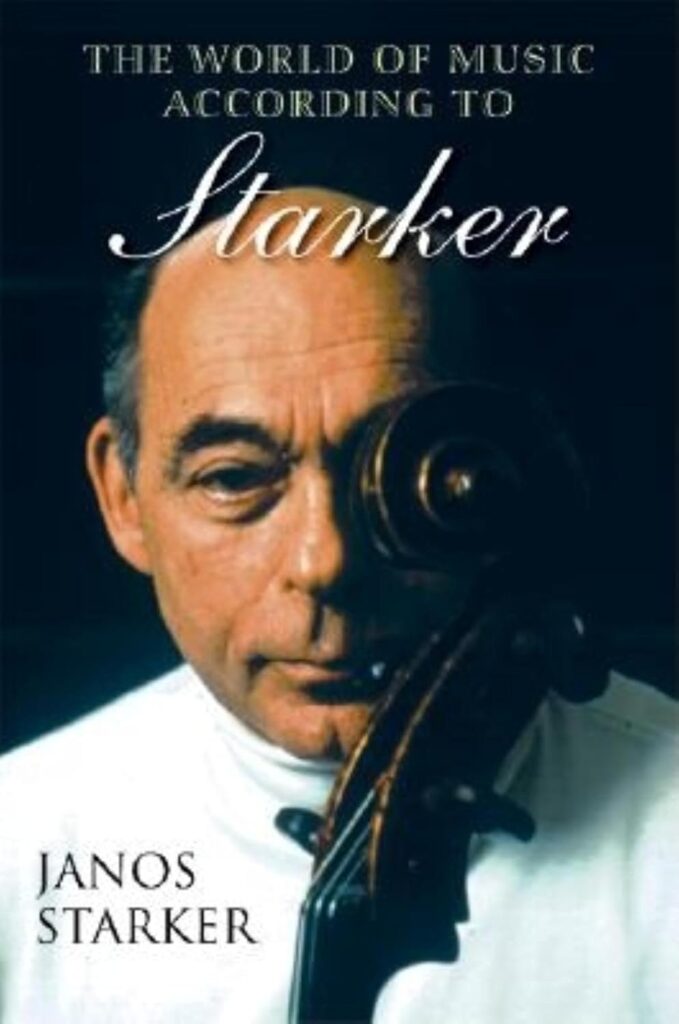
Which is why the late cellist Janos Starker lived long enough, despite his taste for drink and smoke, to write a memoir of his nearly 90 years. He was close to perfect musically. And, it seems, as a man, despite his genuine humbleness.

61kt4pg mjl. sl1500
The World of Music According to Starker

Starker believed that consistency – steady, non-showy quality – is the greatest attribute both of great musicians and of himself. Not, actually, perfection. But . . . perfection is what he came close to with that philosophy.

He spent the 1950’s as the principal cellist for conductor Fritz Reiner’s Chicago Symphony Orchestra.

conversation with jános starker
Janos Starker

Reiner ran his orchestra as a private fiefdom. He could hire and fire at will. By all accounts, Starker was one of the few who never had to worry about that. He was, like Reiner, consistently good. As in NO mistakes good. And he was a solid, as Reiner himself was. Two workmanlike colleagues, all of one mind, all business.

So it was quite a scene when Starker made one big, loud boo-boo at one of the last Chicago rehearsals before he left for teaching and solo stardom.

The entire orchestra laughed at the boo-boo, since it was a fact that for 9 years Starker had made none, even in mere rehearsals.

Reiner threw his baton on the floor and screamed.

“Am I not allowed to make one mistake after 9 years?” Starker plaintively asked.

No, no you are not allowed to make mistakes in any serious musical situation. Which probably explains why the classical music world is so loopy and why you need so many whiskeys and cigarettes.

81qfywgo53l. sl1500
anxiety

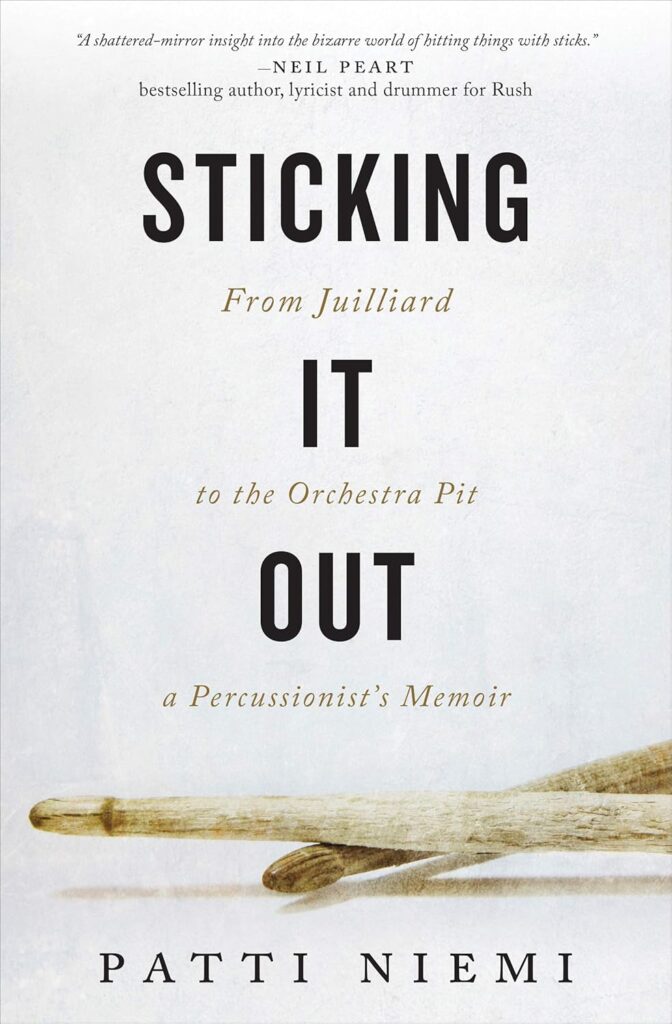
Patti Niemi wrote about her own severe performance anxiety in her memoir, STICKING IT OUT: FROM JUILLIARD TO THE ORCHESTRA PIT.

I got nervous reading the thing, probably because I was on the spot a number of times as a trumpet player in band, stage band, and orchestra as a kid. There was one moment when I had to “start” a piece for an Area All-State orchestra with a rather difficult high note.

I had botched it several times in rehearsal. At the concert, a French horn player turned to me and said, “You’d better hit it.”

And she meant it, too.

I did hit it. The conductor winked at me and smiled. But I realized then and there that music performance was not a lifestyle for me.

Niemi’s book is brilliant in the way it makes true panic come alive. Her case was made infinitely worse by her being a woman in what was a traditionally male position. And by the difficulty all percussionists have with finding a safe place to rehearse. After all, you need to be something like 2 miles away from all but the most amenable people to “stick it” for hours on end.

71otlnyrnpl. sl1500
sex & drugs

And finally sex.

Whereas Starker is discreet about sex in the pits – as discreet as his magnificent playing – the whole point of Blair Tindall’s MOZART IN THE JUNGLE: SEX, DRUGS, AND CLASSICAL MUSIC is such “misbehavior”. The only time Starker mentions sex, it’s when he says that Reiner sat him in the dead middle of the orchestra, such that Reiner blocked his view of the pretty ladies in the audience that Starker had a penchant for eyeballing during his rests.

MOZART proves that while sex and drugs may be a side benefit for rock, pop, country, and jazz artists, it’s more of an escape valve from the kind of tension and stress that Niemi writes about.

MOZART IN THE JUNGLE is a tad sad, even disturbing. It makes one yearn for a life as an accountant, or a night janitor. Apparently classical musicians don’t make love so much as toss themselves randomly at passersby.

Starker’s book even contains some of his short fiction, and his adventures with rare and costly cello models. His book is a great read, and he’s a down-to-earth fellow with insights up, down, and sideways on the musical history of the entire 20th century, well into our current one.

Niemi reads like a horror story, in a good way, if you’ve ever had any experience making music in front of live human beings. It may also make you feel better about giving it all up, although things work out for her in the end.

Tindall?

Tindall is like looking at a three alarm fire. Fun, but only at a distance.

71ci1x1wpll. sl1500

Col. Klink’s More Famous Father

71ci1x1wpll. sl1500
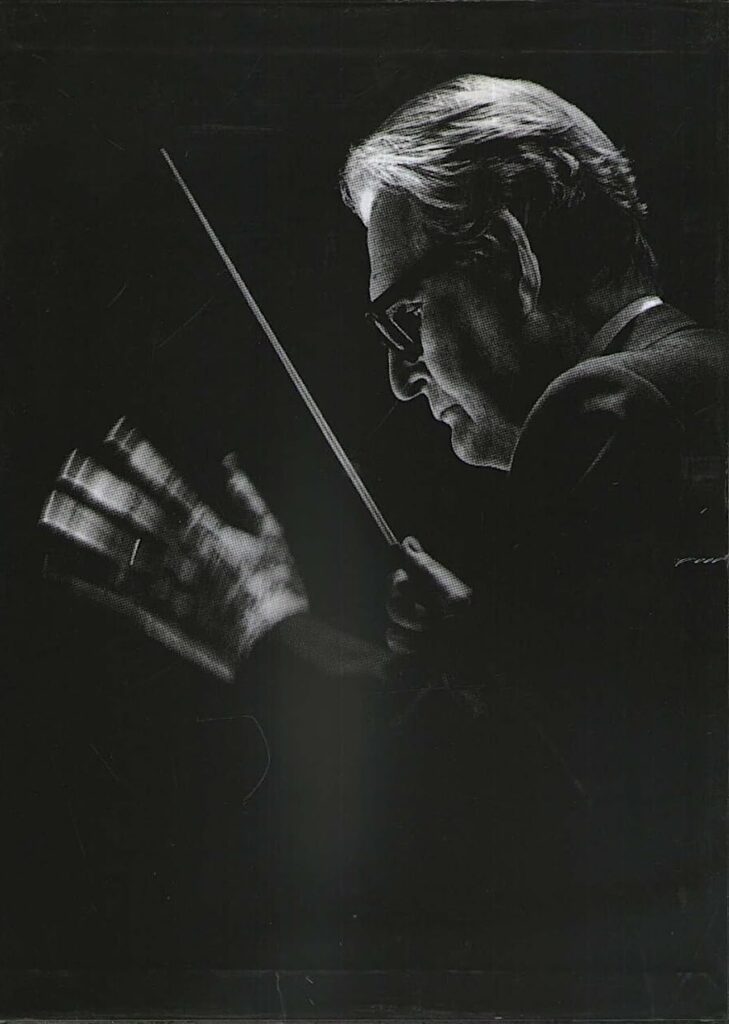
conductor Otto Klemperer

I remember how surprised I was as a kid to find out that Werner Klemperer – Col. Klink on TV’s Hogan’s Heroes – had a father who was more famous than he was.

werner klemperer bob crane hogan's heroes
Werner Klemperer and Bob Crane, Hogan’s Heroes

(Notice the massive baton Klink is wielding. Some things run in families.)

I tried to resist the urge to mention actor Werner, but it was useless. Hogan’s Heroes was a program with an impossible premise – a comedy about prisoner of war camps, World War II, and Nazis – that it pulled off exquisitely.

Otto’s life was also brilliant, but erratic and much, much more difficult.

c 1920 otto klemperer
a young Otto Klemperer

Klemperer was a direct line to the great 19th Century German conductors such as Mahler. His breakthrough came as director of the Kroll Opera House in Germany, which performed mostly avant-garde music in the early 1930’s, composers such as Hindemith and Stravinsky.

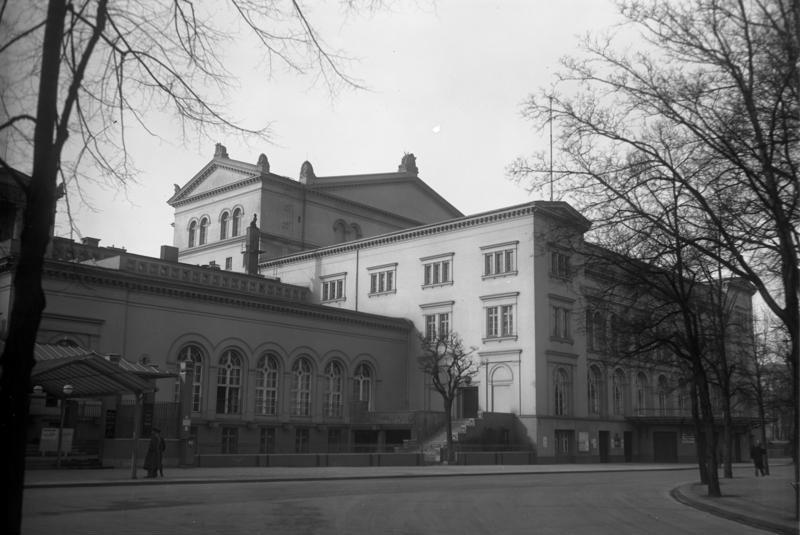
berlin, kroll oper
Kroll Opera House, Berlin, about 1930

Then, in 1933, Otto fell backwards off a podium and suffered a brain injury. Always a manic-depressive, what we now call bipolar, the accident made things worse.

pexels photo 6837561

The manic stages lasted longer, usually for years at a time. Then came prolonged depressive periods of years duration. Throughout it all, the one constant, when not literally laid up from physical mishaps, was his conducting. Sometimes it suffered, sometimes it was transcendent.

But it was always difficult.

In 1939, he was operated on for a large, non-malignant brain tumor. I’ve never been able to find out if the growth may have been a result of his fall off the podium.

In any case, though ostensibly cured, he became mentally more unstable, became even more accident prone, had to escape Nazi Germany (he was Jewish, then Catholic, then Jewish again – his religious life was as interesting as his music and his psyche), had an unfulfilling period in the United States (which he loathed as barbaric and money-grubbing), fell into disfavor politically in the McCarthy era (he was a leftist suspected of Communist sympathies), set himself on fire while smoking in bed and made it worse by dousing the flames with camphor oil, breaking bones, and on and on.

His life was, in essence, a long run-on sentence. One in which he heroically endured.

And then he blossomed in his old age. He discovered the joys of the recording studio.

köln, wdr rundfunkstudio
Studio work allowed him less taxing touring schedules and documented his work for all eternity. He was the EMI label’s biggest classical music draw at a time when classical music was a big seller. Today, you can buy 100 CD box sets of his work, and, of course, stream it or get the LP’s.

He conducted and recorded almost until his death at 88 in 1973.

He dragged a 19th Century monolithic, monumental conducting style into the mid-late 20th Century. He was a giant of a man physically and temperamentally, fearsome to musicians but also respected. His sense of humor was sharp, too.

That’s where Werner got his skills.

werner klemperer on password 1971
Werner at play on a game show